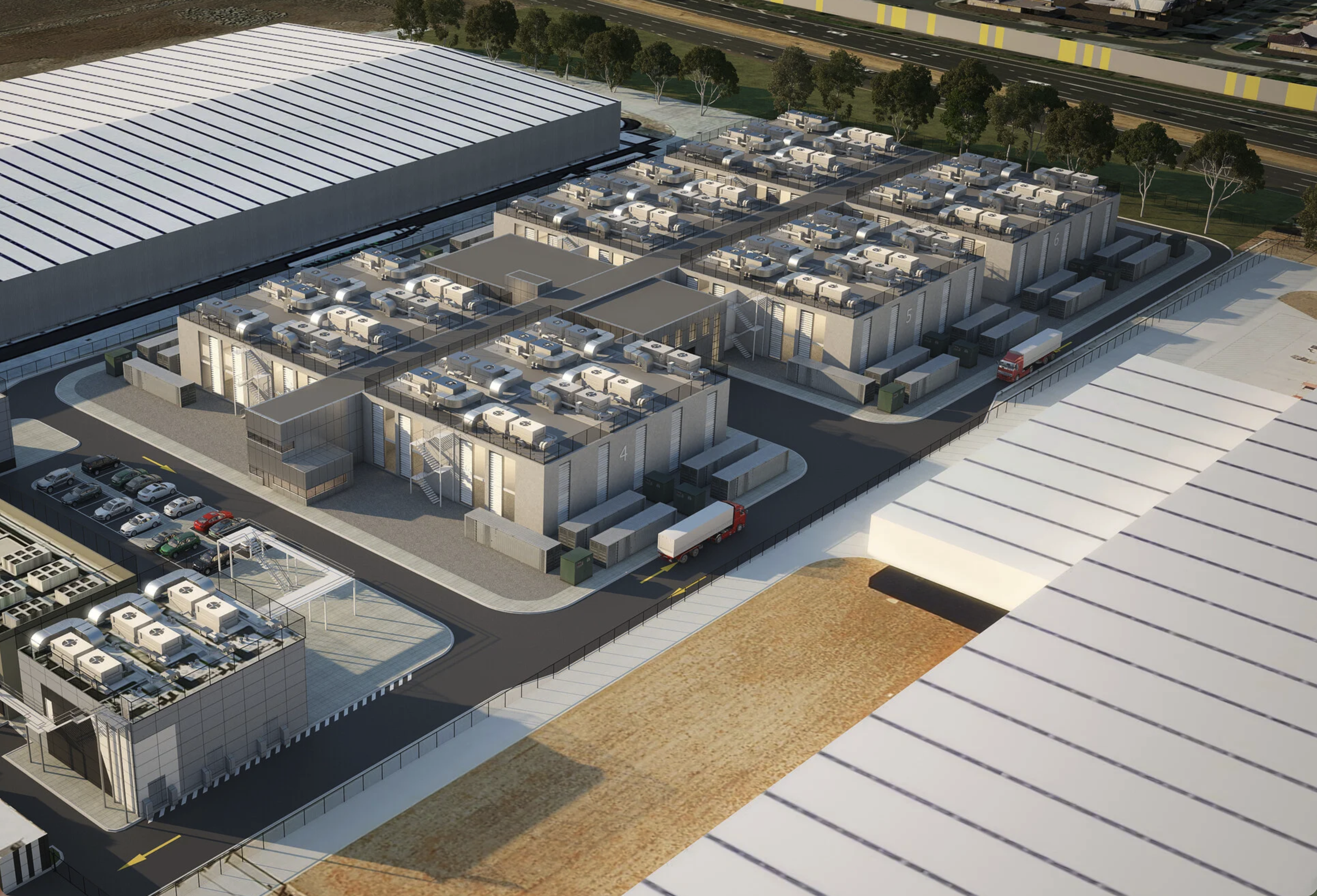
The push to build massive data centres in Australia is intensifying, driven by surging demand for artificial intelligence (AI), cloud infrastructure, and digital services. But with proposals like the 1 gigawatt data centre at Mamre Road in Western Sydney, a facility that would rank among the largest in the world, serious questions are emerging about feasibility, environmental impact, and what it means for the construction and development sector.
Data centres are unlike traditional construction projects. They’re essentially giant, highly specialised facilities housing thousands of high-performance computer chips and systems that power everything from AI models to cloud storage. What’s unique about the proposed mega-centre in Western Sydney is its scale, requiring:
Uninterrupted power equivalent to nearly half the output of a large coal plant, or vast solar generation capacity to match;
Huge volumes of cooling water to keep equipment operating safely; and
Advanced thermal management systems to ensure uptime.
For construction companies and developers, these demands translate into huge civil works, complex electrical and mechanical systems, and close coordination with utilities and regulators.
Meeting the energy requirements of a 1 GW data centre is no small task. Traditional power grids are being pushed to capacity, and while many operators are securing renewable power through power purchase agreements (PPAs), the intermittent nature of solar and wind energy still presents reliability questions. Backup generators, often diesel-powered, remain part of the design, raising concerns about emissions.
Cooling systems in large data centres consume massive amounts of water, potentially tens of millions of litres per day. In regions already experiencing water stress, this places pressure on supply networks and may require significant investment in recycled water infrastructure or alternative cooling technologies.
The chips and specialised hardware needed for AI-capable data centres are expensive and in global demand. Securing these supplies, along with materials for power and cooling systems, is a logistical challenge that developers and builders must address early in project planning.
Even if technically feasible, building mega data centres raises broader questions about whether we should build at this scale? The federal government and industry are promoting Australia as a regional hub for data infrastructure, with national principles under development to streamline approvals. But grid capacity, emissions targets, and community impacts remain at the forefront of the debate.
From a construction and development perspective, this means projects will be evaluated not only on feasibility and cost, but also on sustainability, community acceptance, and alignment with broader energy and climate policy goals.
For developers and construction firms, this sector represents a rare intersection of heavy civil works, advanced engineering systems, and long-term infrastructure planning. Building at this scale:
Opens opportunities for specialised trades and contractors in power, cooling, and data infrastructure;
Requires cross-sector coordination with energy providers and regulators; and
Demands innovation in sustainable design and resource management.
For candidates and talent, the data centre boom signals growth in roles tied to large-scale utilities infrastructure, digital-ready construction, and specialised project management.
This post is based on insights from The Conversation article “Can Australia build one of the world’s largest data centres?” by Bronwyn Cumbo and The Conversation Digital Storytelling Team, published February 10, 2026.
https://stories.theconversation.com/can-australia-build-one-of-the-worlds-largest-data-centres/
Image is for illustrative purposes only and may not reflect the final design of the project.
